Precise spreading
Delivery tailored to the agreed areas, materials and application rate.
Service 04 · Spreading for habitat restoration
Spread soil amendments and other granular materials with drones, tailored to your management measure.
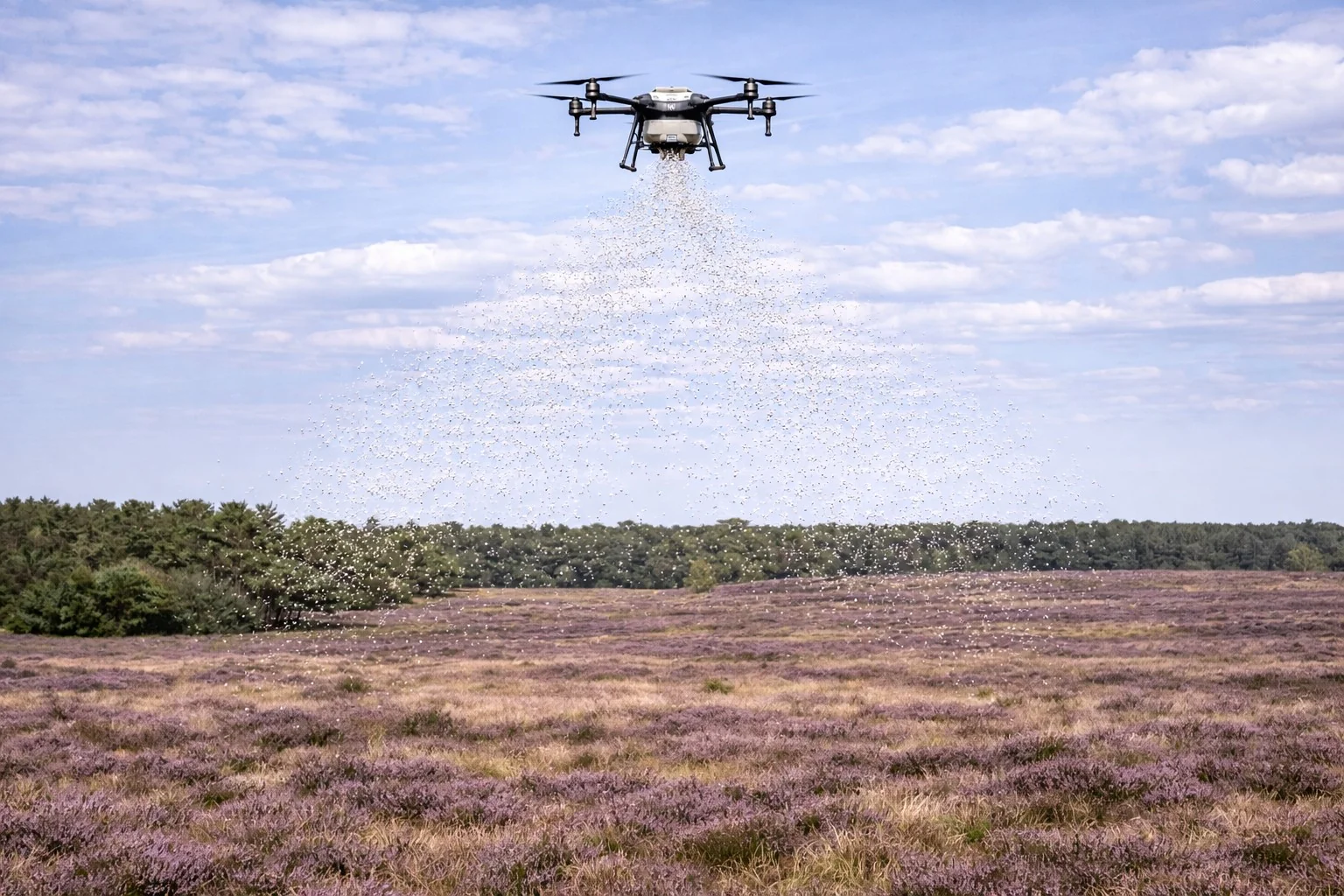
Why we spread with drones
HeathClean spreads granular materials such as rock dust, lime, crushed shells and wool pellets.
Drones spread the material without vehicles in the work area. This avoids vehicle ruts and soil compaction from vehicles.
The land manager defines the task. Where needed, our specialist partner can advise on material choice and application rate.
What grows locally can bring value back locally.
From heathland wool to new possibilities for conservation management.”
How we spread
We agree the material, work area and application rate with you and carry out the work using drones. Where needed, our specialist partner supports material selection and application-rate advice.
For wool pellets, we use our own circular approach, with ongoing research into their effects.
What this gives you
Delivery tailored to the agreed areas, materials and application rate.
A practical approach for sensitive sites and difficult terrain.
HeathClean organises the work and coordinates any support you need.
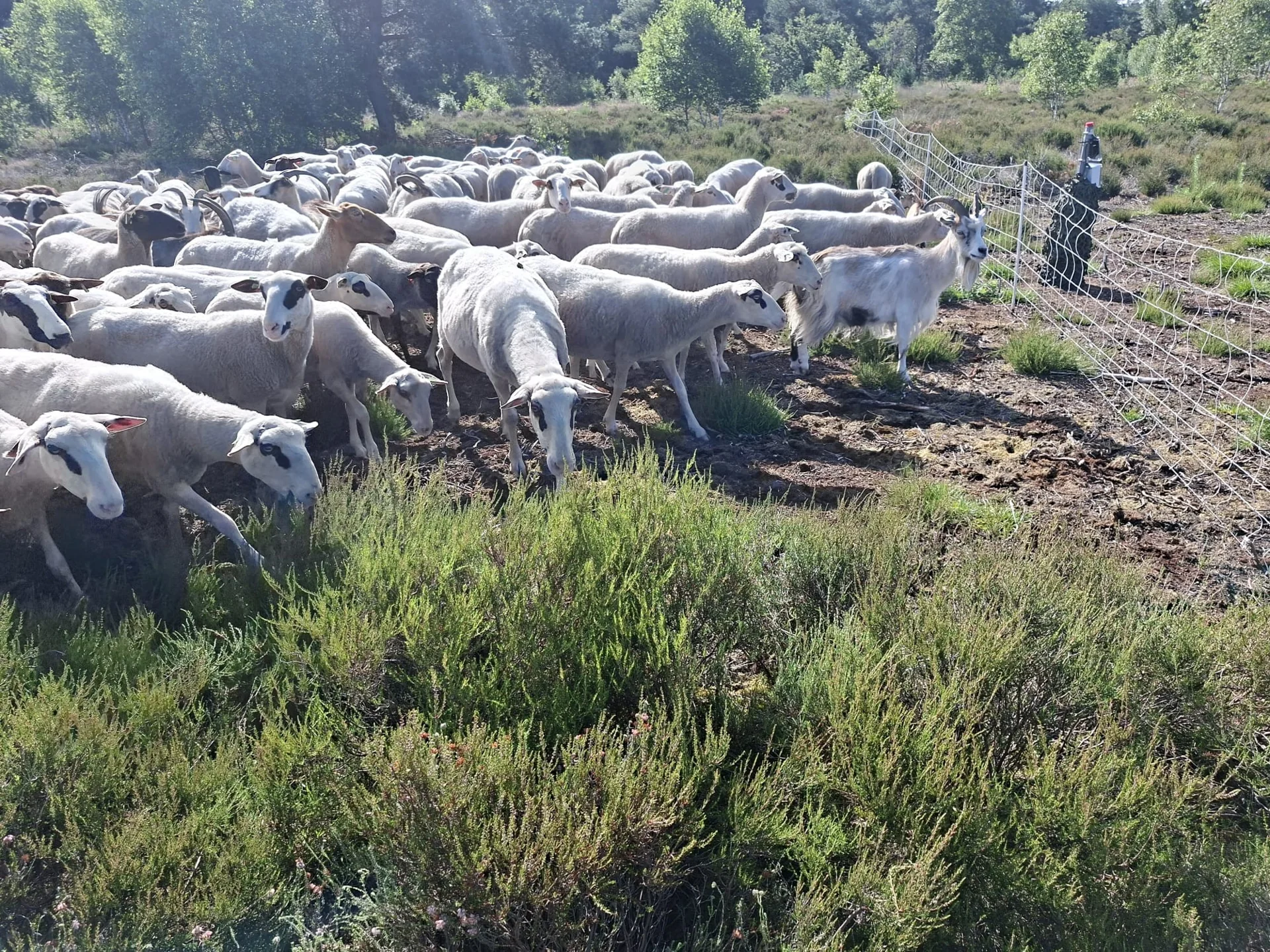
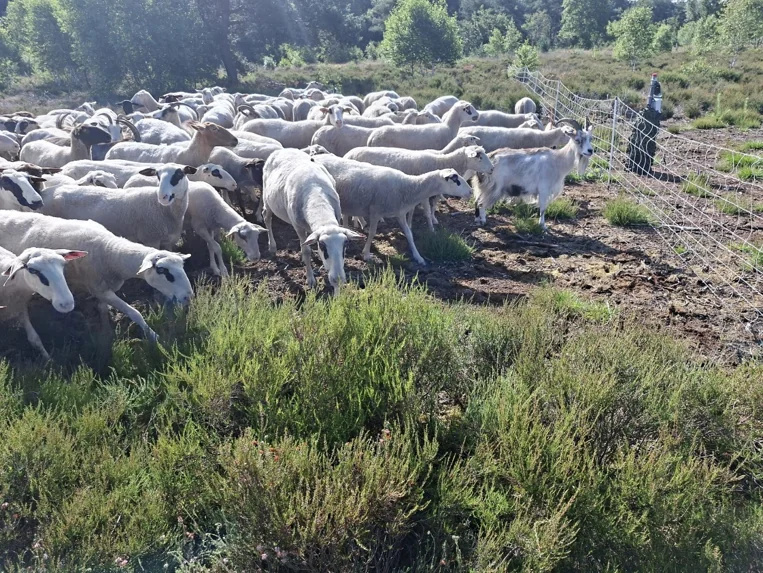
HeathClean buys wool from heathland sheep at a fair price. Local wool gains a new purpose and shepherds gain an additional source of income.
Shepherd · Wool processor · Land manager · HeathClean
The local wool cycle
Wool from heathland sheep is less suitable for clothing and has little value for shepherds. HeathClean buys it at a fair price and commissions SKAL-certified wool pellets. A local by-product gains a new purpose and shepherds gain an additional source of income.
The land manager buys the wool pellets as a soil-improvement material for conservation management. HeathClean agrees the application and rate with the partner and land manager, then spreads them with drones.
We are building a local, repeatable cycle between shepherds, land managers and nature. Wool from the surrounding area gains value again on the site through targeted application without vehicle ruts.
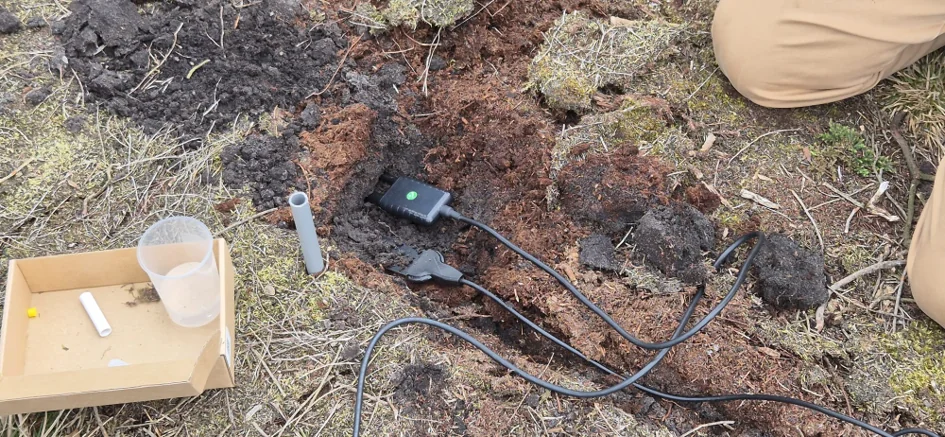
HeathClean is carrying out intensive research to establish a scientific basis for this application. We study effects on soil pH, nitrate and water balance and their implications for site management goals.
What wool may offer your site
Our initial research findings indicate greater moisture retention when wool is applied. We are tracking how this works under site conditions.
Our research provides initial indications of a pH-raising effect. Its significance for conservation management depends on soil, application rate and the intended habitat management type.
Local wool and drone spreading may reduce transport and heavy operating logistics. We assess the cost benefit for each site and application.
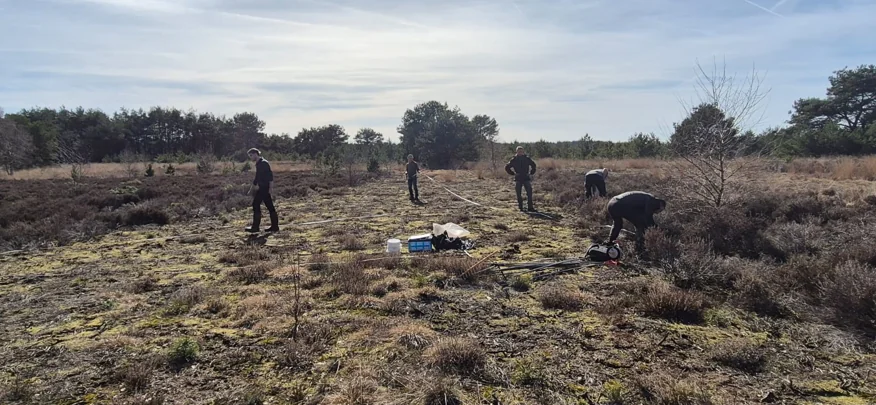
Field research
We study the effects of wool pellets on pH, nitrate and water balance. Initial findings on pH and moisture are a reason to keep monitoring this application and tailor it carefully to conservation management.
A soil effect is useful only when it supports your management goal. We therefore consider the material, application rate and site conditions, combining measurements with ecological interpretation.
Delivery and costs
Drones often add the most value on sensitive or hard-to-reach sites. No vehicles need to enter the spreading area. Heavy supply and operating logistics may also be reduced.
We compare delivery options for your specific site. Access, area, application rate and chosen material determine the costs. You receive a proposal suited to your management measure, with a clear view of possible savings.
Practical questions
Granular materials such as wool pellets, rock dust, lime and crushed shells. Together, we discuss whether the chosen material and application suit your site.
The management task is the starting point. HeathClean agrees delivery with the land manager; where needed, our specialist partner advises on material choice and application rate.
HeathClean buys local wool from heathland shepherds and commissions SKAL-certified wool pellets. The land manager buys the pellets for use on the site; HeathClean spreads them with drones.
HeathClean is researching soil pH, nitrate and water balance. Initial findings indicate effects on pH and moisture retention. The effect on your site depends on soil, application rate and management goal; we are developing the evidence further.
Discover what is possible
Meet us at a presentation or see the solution during a live demonstration in the field.
Cookies at HeathClean
With your permission, we display videos and live news through three external partners. They may use cookies and process data such as your IP address. You decide what to allow. More information.
Want to change or withdraw your choice? You can do so at any time in Privacy settings.
We remember your choice on this device for six months. External processing may take place outside Europe. More information is available in our privacy notice.