No vehicle ruts
Vehicles do not need to enter the work area for delivery.
Service 03 · Sapling removal
Selectively cut down young conifer growth using drones, with the option to leave the material on site or remove it.
Why we remove saplings
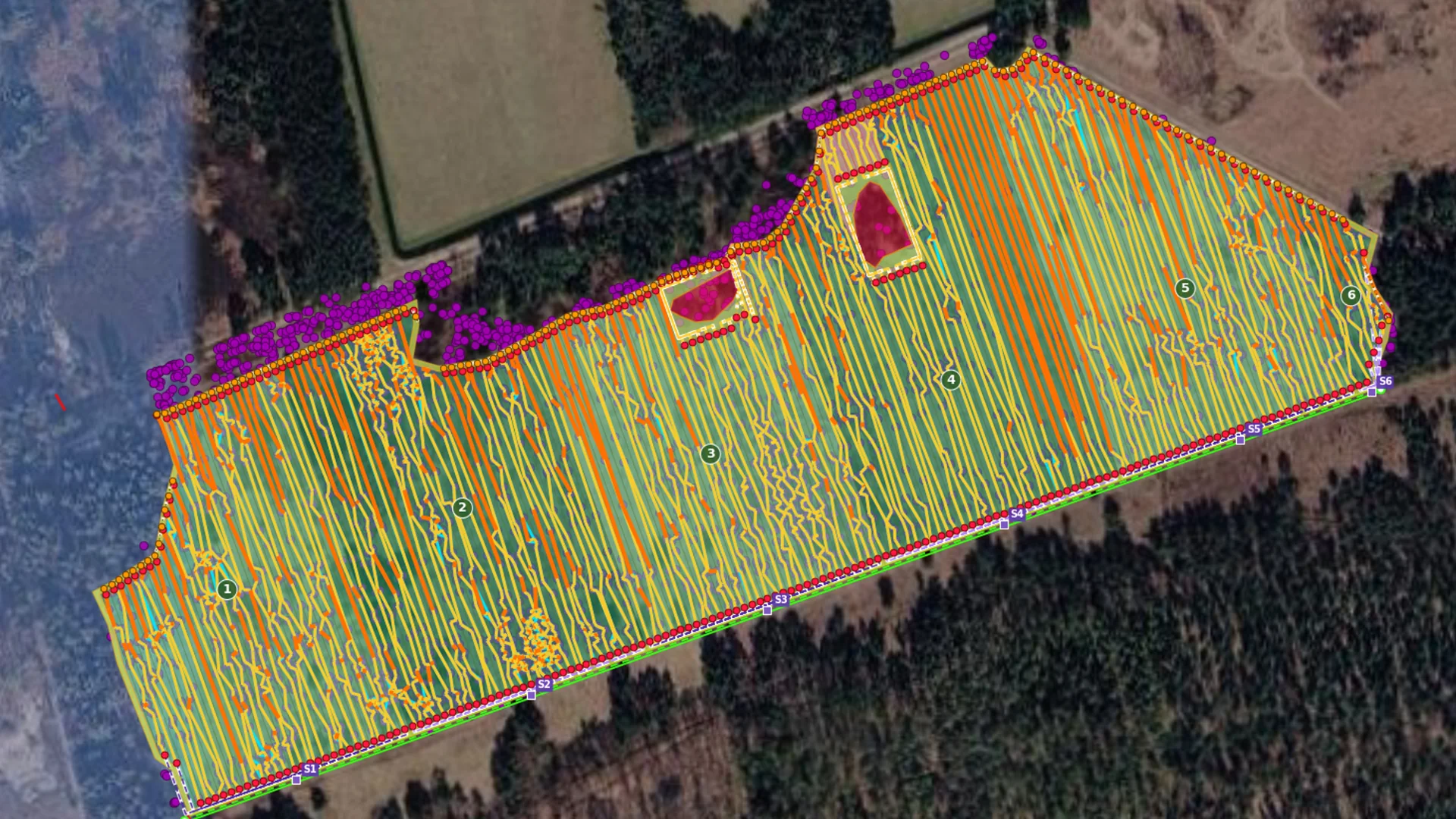
Young trees can gradually overgrow open habitats. The work needed is increasing while land managers face limited budgets and available staff.
With our own cutting technology, we remove saplings precisely from the air. Sensitive sites and difficult terrain are particularly relevant applications. Suitability and costs depend on the site and the growth; we discuss in advance where this approach can add value for you.
We intervene not to change…
but to preserve what is valuable.”
How we remove saplings
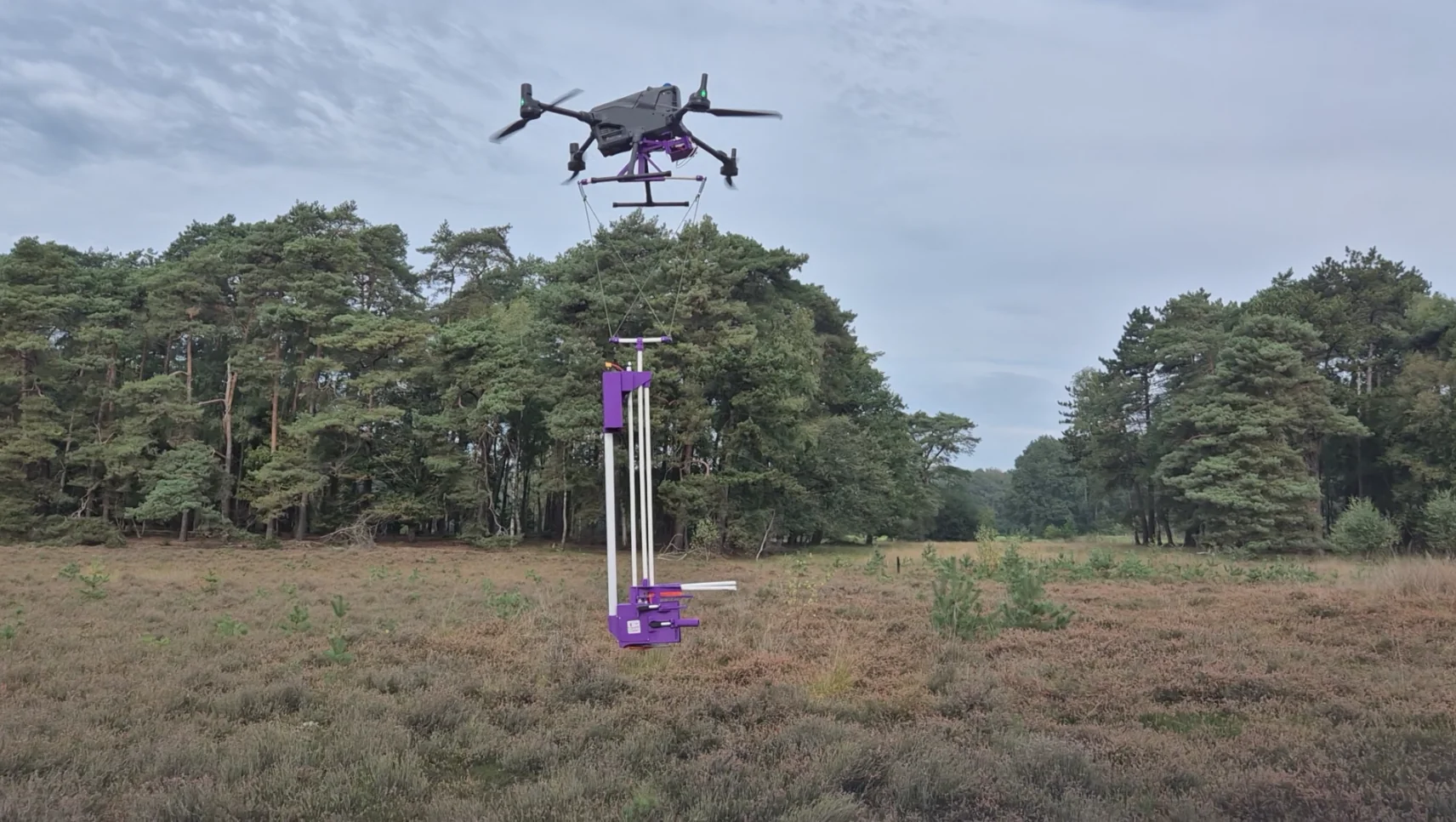
Together with the land manager, we decide which saplings to remove. The current survey forms the basis for work with our own cutting technology.
The cut trees can stay on site or be removed. We agree this choice according to the site and management goals.
What this gives you
Vehicles do not need to enter the work area for delivery.
We agree with the land manager which growth is removed and what is retained.
Drones add capacity, particularly where terrain and access make manual work difficult. This leaves more capacity for other management tasks.
Scalable conservation management
Our approach grows with your management challenge. One team works with four drones at once. Adding complete teams allows us to expand delivery without every extra hectare requiring the same increase in manual work.
This capacity is the basis for the planned scale-up to a fully operational team in March 2027. Annual capacity assumes an average of 180 working days at around 4 hectares per day. Achievable output depends on terrain, sapling density and operating conditions.
Current capabilities
We currently treat young growth from the pine family, of species that do not resprout from the stump after cutting. In 2027, we aim to extend this to removing broadleaf trees from sites.
We discuss suitability and delivery for your site in advance.
Insight and action together
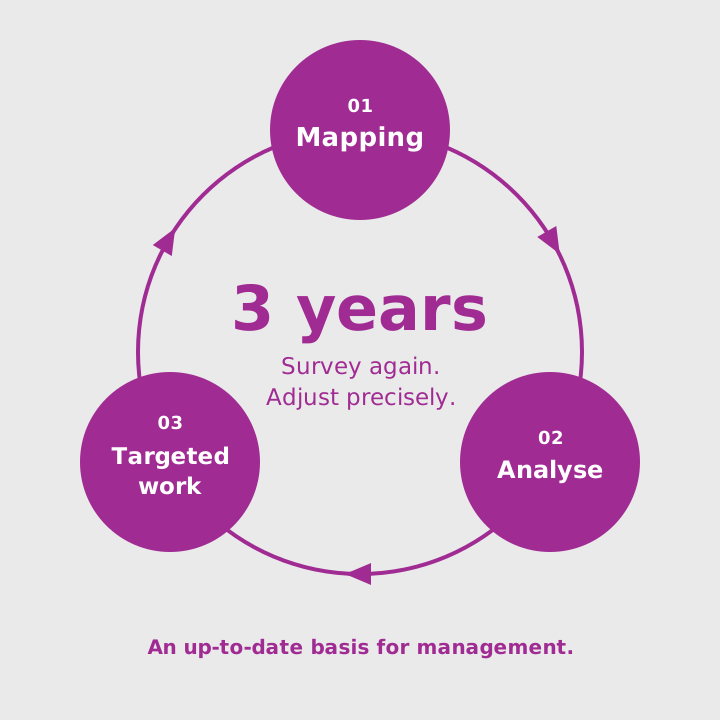
We believe in a three-year management cycle: surveying again, analysing vegetation and removing saplings precisely. This provides a regular, up-to-date interim assessment so you can adjust management before growth increasingly takes over the open landscape.
The new survey forms the basis for delivery. Adding a vegetation analysis at the same time shows how much growth returns, where grass encroachment changes and what previous management measures achieve.
We tailor the cycle to your site and management goals. More frequent surveys or work are possible if development requires it. This interim assessment supports the ecologist and regular vegetation mapping.
MVP · September 2026
The field test demonstrates cutting down young trees and the option to remove them.
Practical questions
Young growth from the pine family, of species that do not resprout from the stump after cutting. We apply a maximum age of three years and stem diameter of 40 mm. Suitability is assessed in advance.
Yes. You can choose to leave them on site or have them removed. Removal currently has a maximum weight of 3 kg per tree. We agree the choice according to your site and management goal.
Especially on sensitive sites and difficult terrain. Vehicles do not need to enter the work area, avoiding vehicle ruts. On easily accessible sites, traditional methods may be more affordable; we assess each site individually.
Four drones, up to 2,000 young trees and around 4 hectares per working day are the target capacity from the planned scale-up in March 2027. Around 720 hectares per team per year assumes 180 working days. Terrain and sapling density determine achievable output.
Discover what is possible
Meet us at a presentation or see the solution during a live demonstration in the field.
Cookies at HeathClean
With your permission, we display videos and live news through three external partners. They may use cookies and process data such as your IP address. You decide what to allow. More information.
Want to change or withdraw your choice? You can do so at any time in Privacy settings.
We remember your choice on this device for six months. External processing may take place outside Europe. More information is available in our privacy notice.